ERP is the digital backbone that helps enterprises optimize operations, governance, and sustainable growth. However, for many businesses on their digital transformation journey, ERP remains a difficult concept to visualize in terms of how it is applied and the value it delivers. Drawing on its implementation experience in Vietnam and the region, Citek shares a detailed and easy-to-understand perspective on what ERP is and the various aspects surrounding ERP systems in the article below!
1. What Is ERP? An Overview of ERP Systems
ERP stands for Enterprise Resource Planning, an enterprise resource planning system, or enterprise management system. Put simply, applying ERP in a business helps manage and coordinate operations, processes, and data more effectively within a single, centralized system.
An ERP system standardizes and streamlines business processes across finance, manufacturing, distribution, sales, procurement, supply chain, projects, service, customer care, and more. With a shared common database and real-time data visibility, ERP provides an accurate and timely source of information on business performance, helping enterprises optimize operations and plan resources appropriately.
For example: A business needs to know the number of orders across multiple branches nationwide by month or by week in order to plan production. Or it needs to check detailed inventory levels and raw material input costs. With ERP, the business gets specific, up-to-the-minute answers to these questions with just a few clicks, improving productivity, agility, and operational performance.
History and Development of ERP
ERP had modest beginnings more than a century ago, starting with paper-based manufacturing systems for production planning. It was not until the 1960s that manufacturing companies began applying business management software. Although faster and more accurate than manual methods, this software was still expensive, limited in functionality, and fairly slow.
However, these pioneering applications also drove the development of specialized, standalone solutions such as sales order processing and Material Requirements Planning (MRP). Over time, this software was integrated into a single system that improved operational efficiency, forming the first shape of ERP.
 The history and development of ERP systems
By the 1990s, ERP had helped transform the technology field through its ability to be effectively applied across more business operations and industries.
Today, ERP has become an indispensable management system for enterprises. It is often described as the backbone of business operations and management across industries as diverse as retail, manufacturing, distribution, and services, through to finance and e-commerce — all of which rely on ERP. Solutions from leading developers such as SAP, Oracle NetSuite, Microsoft,… have integrated artificial intelligence (AI), machine learning (ML), and cloud computing, helping enterprises optimize processes and maintain a competitive edge in a rapidly changing environment.
2. Key Characteristics of ERP Systems
2.1 Integration
An ERP system integrates multiple business processes into a single centralized database and management platform. With this approach, every activity within the enterprise — from finance and manufacturing to human resources and supply chain — is managed consistently.
ERP consists of multiple modules, each serving a specific business function. For example, the finance module supports accounting and budget management, while the supply chain module helps optimize logistics and warehouse management processes. A key highlight is the centralized data repository: when data is entered into one module, it automatically updates across other related modules, ensuring consistency and accuracy.
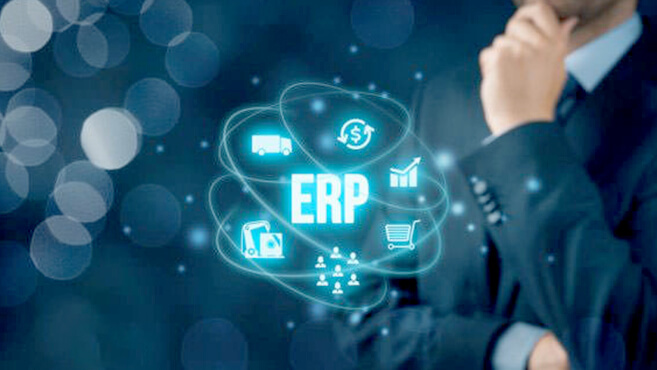 ERP integrates multiple modules within a single, unified, and flexible system
2.2 Centralized, Real-Time Data
One of the key characteristics of an ERP system is its ability to update data in real time in a centralized manner. This ensures that every change or new transaction is reflected in the system immediately, helping enterprises make fast, accurate decisions based on the most up-to-date data.
2.3 Flexibility
An ERP system offers high flexibility, allowing enterprises to customize processes to fit their specific needs. This is especially useful for businesses with unique operational requirements or those that need to adapt to changes in the business environment.
2.4 Scalability
Modern ERP systems are designed with scalability in mind, allowing enterprises to start with essential modules and add other modules as specific needs arise. This not only helps optimize initial investment costs but also ensures the system can grow alongside the business. In addition, many ERP systems support the integration of new technologies such as artificial intelligence (AI) and Big Data to meet future trends and challenges.
3. Why Is ERP Important for Enterprises?
ERP is often described as the "digital backbone" of most enterprises. As soon as it is implemented, ERP delivers clear, immediate benefits such as automating and digitizing processes to optimize workflows. Data is stored accurately, enhancing predictability in business operations.
Specifically, ERP brings a number of important benefits to enterprises, including:
- Standardized systems: Eliminates the risks of using multiple separate systems, reducing errors and improving security. Data is unified, increasing the efficiency of data transfer.
- Better accounting and financial reporting: Provides a comprehensive financial view, manages complex transactions, shortens financial closing time, and tightens control over subsidiary operations.
- Optimized management and operating costs: Reduces manual activities, the cost of maintaining separate management software, and the risks of operating cost overruns or a lack of information transparency.
- Timely, accurate, and intuitive data updates: Gives business leaders a comprehensive view of operations across the entire enterprise. This helps businesses identify existing opportunities and challenges, enabling faster, more informed decisions and reducing business risk.
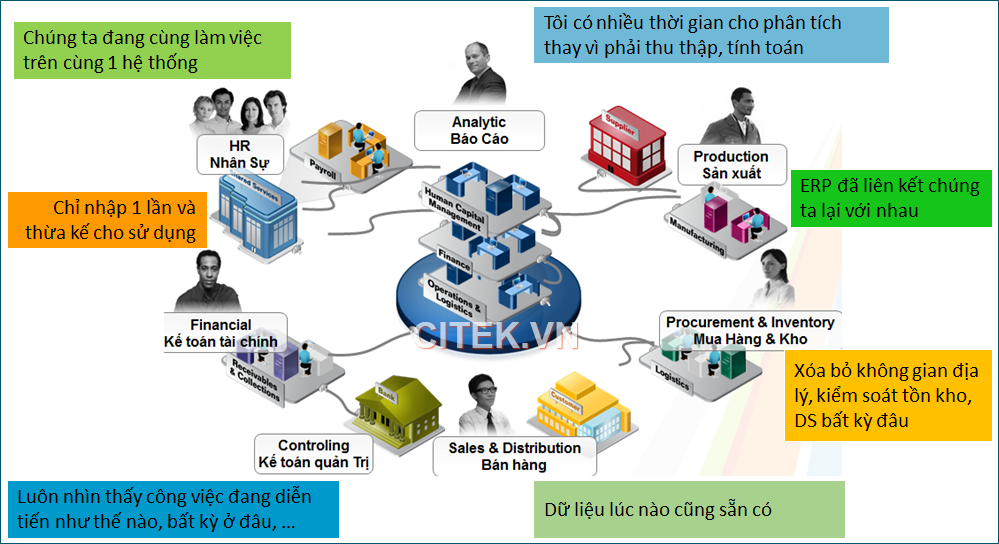 ERP systems bring many benefits to enterprises
- Process automation: Improves operational performance and accuracy, freeing employees to focus on more important tasks.
- Better data security: through data centralization, data consistency, access control, and audit tracking.
- Improved customer relationships: Helps enterprises communicate faster and more effectively, enhancing customer satisfaction.
-
Access rights and governance: Helps leaders effectively manage the enterprise system, maintaining full control over the entire system, including employees' workflows.
-
Flexible, comprehensive system management: With cloud-based ERP systems (ERP Cloud), users can access the system anytime, anywhere, from any internet-connected device.
4. Common ERP Deployment Models Today
ERP systems have 4 common deployment models: On-premise, On Cloud, Two-tier, and Hybrid, specifically:
4.1 On-premise ERP
On-premise is the traditional ERP deployment model, offering the highest level of control. The system is typically installed on-site in the company's own data center, which also comes with the responsibility of ongoing installation and maintenance.
4.2 Cloud ERP
With Cloud ERP, the software resides on a remote third-party server. The system is deployed as a SaaS (Software as a Service) offering.
The system provider is responsible for management, maintenance, updates, and security on behalf of the enterprise. Today, Cloud ERP is the most popular ERP deployment method, offering lower upfront costs, greater scalability, faster innovation, and easier integration.
4.3 Two-tier ERP
The Two-tier ERP model is a layered structure, typically adopted by enterprises undergoing major operational changes such as mergers, expansion, or acquisitions (M&A). In this model, the enterprise uses two different ERP systems to serve management needs at different levels.
- Tier 1 ERP: The central ERP system, typically an On-premise ERP deployed at the parent company's headquarters, responsible for managing all strategic operations and centralized data.
- Tier 2 ERP: Typically a more flexible Cloud ERP system, serving specific branches or business units.
This model helps enterprises transition to the cloud platform gradually and in a controlled manner. By deploying cloud ERP for specific departments or functions, businesses not only avoid disrupting their entire operations but also optimize costs and management efficiency.
4.4 Hybrid ERP
Hybrid ERP is a variant of Two-tier ERP, representing a combination of two ERP deployment methods: On-premise ERP and Cloud ERP. This model allows enterprises to flexibly use each form for the needs it suits best.
- On-premise ERP: Used to manage data requiring high security and to ensure compliance with industry regulations.
- Cloud ERP: For departments that require flexibility, scalability, and remote access.
In other words, Hybrid ERP allows enterprises to leverage the strengths of both approaches without having to fully commit to one, thereby meeting complex requirements while also supporting operational optimization.
5. Differences Between ERP Systems and Standalone Management Systems
ERP systems and standalone management systems (such as accounting software, HR management software, warehouse management software, etc.) are both powerful tools that support enterprises in management and operations. However, there are differences between them in terms of scope, features, and integration. Below are the main differences:
5.1 Management Scope
While standalone management software focuses on solving specific functions such as accounting, HR, or warehouse management, ERP connects all of these processes within a single system. This allows data to flow continuously and stay synchronized across departments, minimizing errors and improving performance.
For example, accounting software mainly serves financial management, bookkeeping, cash flow, and processing receipts and payments. ERP, on the other hand, encompasses financial management, accounting, and enterprise financial planning. In addition, the ERP system also supports financial planning based on data from many other departments. ERP helps connect and synchronize data across modules such as manufacturing, purchasing, warehouse management, sales, and more. This gives enterprises a more comprehensive view of detailed costs at each department, helping them make decisions that optimize costs and improve operational efficiency.
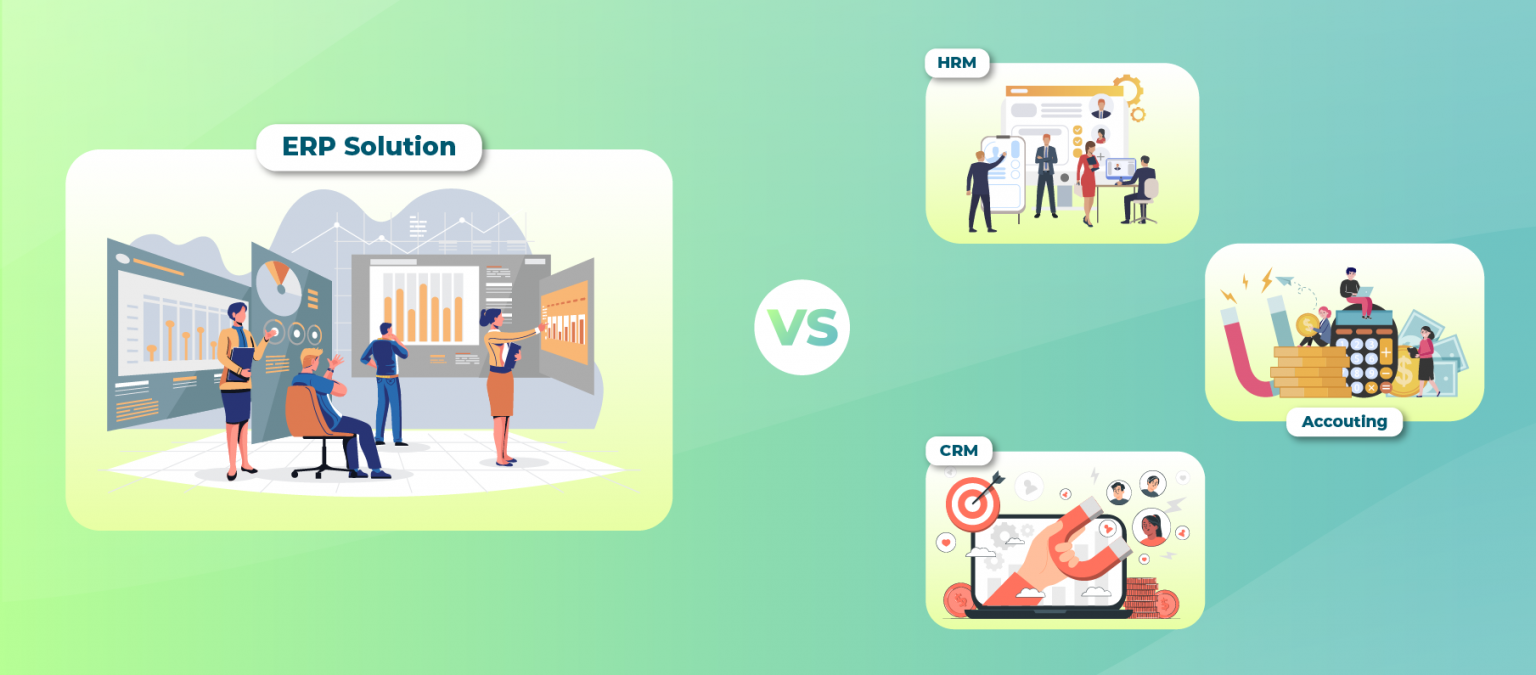 Differences between ERP systems and standalone software
5.2 Solution Features
ERP not only supports basic management functions but also provides advanced tools such as real-time data analytics, resource planning, demand forecasting, and automation of complex processes. Standalone software typically lacks this flexibility and is difficult to scale as the business grows.
5.3 Integration
ERP is a unified, multi-module system integrated into a single overall architecture, allowing different activities to be more closely connected, increasing data processing speed, and improving the operational efficiency of each department across the enterprise.
The workforce's operational activities are carried out according to defined processes, information flows automatically, and is more tightly controlled; reports generated from the ERP system are also more complete and accurate. As a result, work productivity and management effectiveness across the enterprise are improved.
6. When Does an Enterprise Need to Implement an ERP System?
Initially, many start-ups or growing businesses manage their business processes using simple tools such as QuickBooks or Excel spreadsheets, accounting software, and various disconnected management tools by department. As scale and complexity increase, these tools gradually become less effective, causing operational disruption and reducing overall process efficiency.
Below are the clear signs that indicate a business needs to implement a modern ERP system:
6.1 The Business Needs to Scale Up (Growth, Expansion, M&A)
When a business grows rapidly, expands into new markets, or undertakes mergers and acquisitions (M&A), manual management or the use of disconnected tools can no longer meet its requirements.
ERP helps businesses manage data in a centralized, synchronized way, supporting smooth operations regardless of scale or organizational complexity.
6.2 Too Much Time Spent on Daily Tasks
Do activities such as closing the books take longer than expected? The reason may be the use of multiple disconnected, siloed applications. ERP software integrates data and simplifies complex processes, helping departments communicate more effectively.
6.3 Difficulty Accessing Critical Data
Can the business immediately answer important questions such as revenue by product or the return rate? If not, disconnected systems are limiting the business's ability to manage data and KPIs. What is needed is to synchronize data across departments through an ERP system, enabling faster data retrieval and decision-making.
6.4 Business Processes Out of Control
Is the business struggling with inventory management, customer satisfaction, or cost control?
Business processes need to be restructured, and ERP is an effective tool to help enterprises achieve this.
6.5 Lack of Standardization, Duplicate Data
If departments use multiple different applications, duplicate data entry occurs and the risk of errors increases. ERP consolidates and standardizes processes, enabling fast and accurate reporting.
6.6 Missed Opportunities
If a business spends most of its time just keeping operations running and cannot pursue new opportunities, this is the time to consider implementing ERP.
A modern ERP system not only optimizes operations but also integrates smart analytics tools, helping businesses identify opportunities and achieve sustainable growth.
7. How to Choose the Right ERP Solution for Your Business
To choose the right ERP solution, a business needs to consider company scale, needs, and ERP deployment scope as the basis for selecting an appropriate implementation solution:
- Company scale (the number of companies, branches, and factories that need ERP)
- The number of personnel who will use the ERP system (headcount by department, branch, and factory)
- Product groups, and trading and manufacturing products (production output, sales volume, number of transactions per business function/day)
- If it is a manufacturing company, is the production model simple or complex? What are the management needs for manufacturing?
- Scale of expansion and growth in the future (the next 3–5 years)
- What issues does the company need to prioritize today? What current difficulties in each department or division need to be resolved?
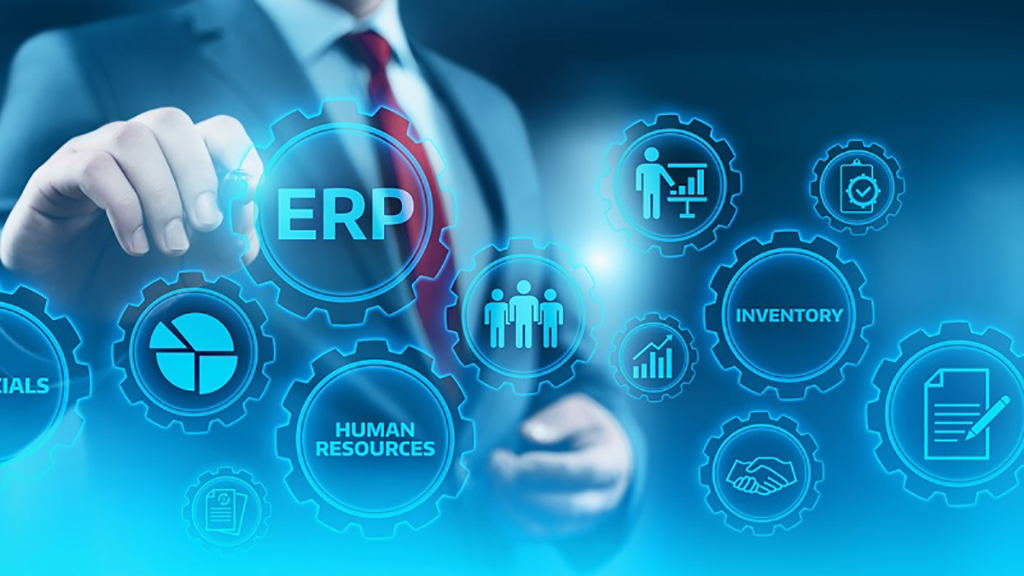 Enterprises need to consider many factors to choose the right ERP implementation solution
- To ensure a successful ERP implementation, enterprises should consider investing in the project according to the following strategy:
- Think Big – Think holistically to arrive at a solution that meets long-term needs.
- Start Small – Start with a moderate scope to ensure success.
- Do Fast – Move quickly to save costs and achieve fast investment returns.
- Budget for ERP investment: an ERP project is considered an investment project, and depending on the investment budget, costs are allocated and recognized over a period of 5 to 10 years.
In addition, when choosing an ERP solution, enterprises also need to pay attention to solutions that apply industry-standard processes (best practices for industry) to unify management and operating indicators across the entire company, its factories, and its branches.
 Applying standard processes (best practices) to ERP implementation
Applying standard processes (best practices) in ERP project implementation — processes that have been researched and successfully deployed by large enterprises — helps businesses effectively address industry-specific challenges. At the same time, applying standard processes helps reduce the cost of system research, optimize company resources, and limit issues arising from the system.
A prime example is the SAP S/4HANA Public Cloud solution, built and developed by SAP for large, medium, and small enterprises. This solution set is distilled from more than 50 years of SAP's enterprise implementation experience and can be deployed in phases, helping businesses implement ERP successfully, optimize costs, achieve efficient data migration, and shorten project timelines.
8. Citek – Accompanying Enterprises in Digital Transformation and Effective ERP Implementation
Implementing an ERP system is a necessary step once a business has developed to a certain level. It is the fastest way for enterprises to standardize and optimize management effectiveness, improve business performance, and create momentum for long-term growth.
As one of SAP's leading ERP consulting and implementation partners in Vietnam, Citek is committed to delivering comprehensive digital transformation solutions tailored to each enterprise. Citek has a team of experienced experts who have successfully delivered numerous ERP projects for domestic and international organizations across a wide range of industries and scales.
Citek's approach goes beyond system implementation alone — it also focuses on conducting current-state assessments and advising on an ERP adoption roadmap aligned with each enterprise's growth objectives and budget.
