What Is ERP Implementation?
An ERP system integrates multiple business activities — such as financial management, HR, sales, and manufacturing — to boost productivity and operational efficiency. ERP implementation refers to the process of planning, configuring, and running an ERP system. This process typically takes several months and is inherently complex, since the ERP system must support and automate a wide range of different functions across the organization.
To ensure a successful implementation, a business needs to clearly define its requirements, determine how to redesign internal processes to take full advantage of the system, configure the ERP system to support those processes, and rigorously test everything before rolling it out to end users. Keeping all of these steps on schedule requires careful planning, along with a systematic, phase-by-phase approach.
The Phases of an ERP Implementation Plan
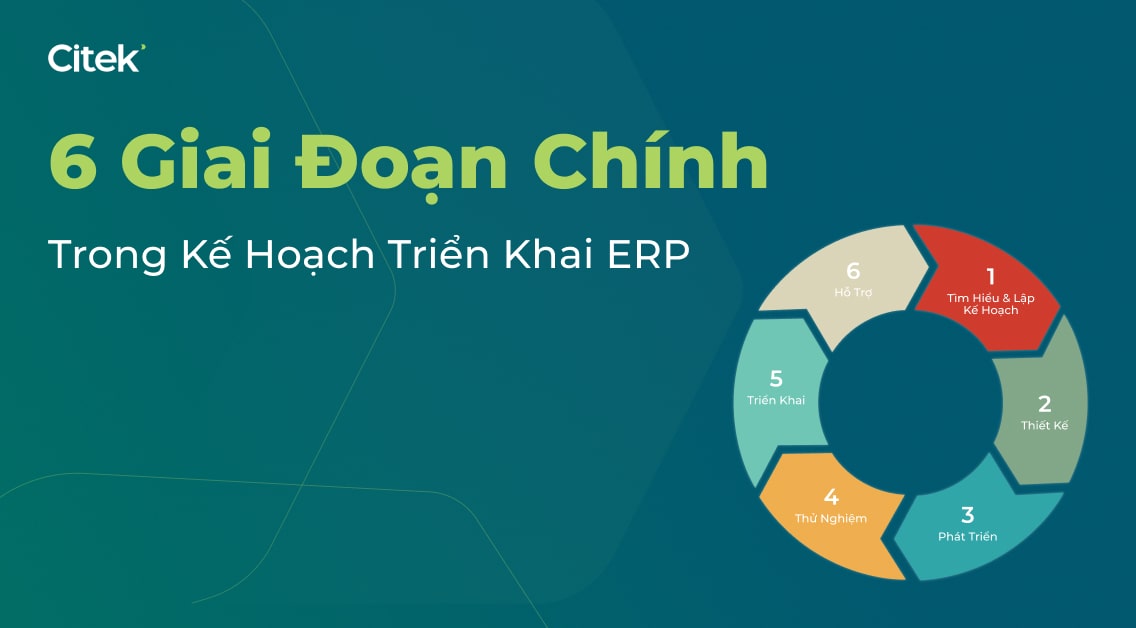
An ERP implementation plan is typically divided into six phases, each with its own specific objectives. Since every business has its own unique characteristics, these phases may vary slightly or overlap depending on the organization. The ERP Implementation Phase Lifecycle consists of six phases: Discovery & Planning, Design, Development, Testing, Deployment, and Support.
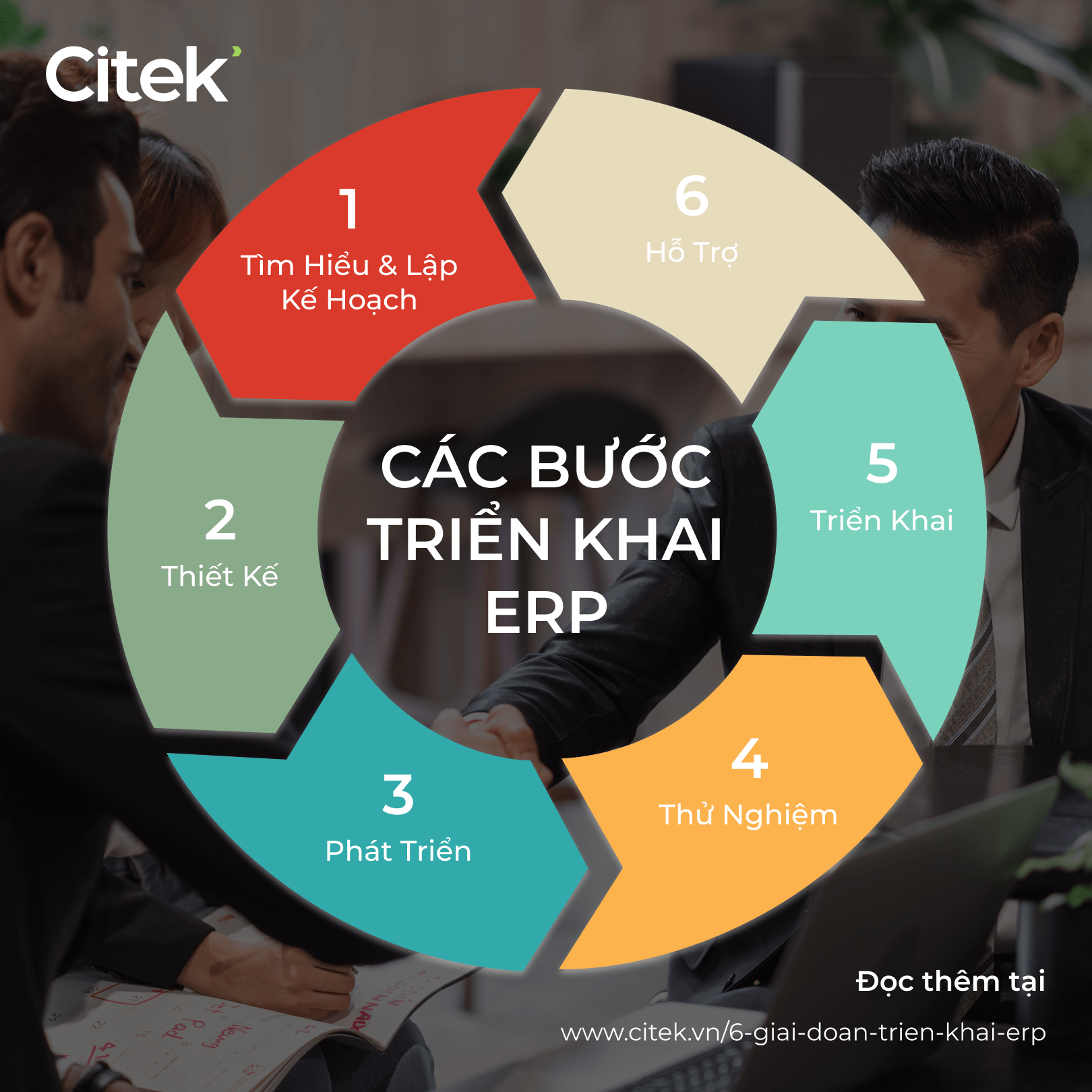 The six phases of the ERP implementation lifecycle: Discovery & Planning, Design, Development, Testing, Deployment, and Support.
1. Discovery & Planning
The first phase of ERP implementation involves researching and selecting the system, forming the project team, and defining detailed system requirements. The project team takes on a range of roles related to the implementation, including planning the project and key milestones, ensuring appropriate resource allocation, making design and product decisions, and managing the project on a day-to-day basis.
An ERP project team typically includes an Executive Sponsor — a senior leader who has a stake in how ERP performance affects the business (usually a top executive, CEO, or board member) — a Project Manager, and representatives from the departments that will use the system. Involvement from senior management is critical to ensuring the project has the resources it needs and to driving major changes across the organization. In addition, the project team may bring in an outside consultant or an ERP implementation partner to provide specialized expertise in system design and configuration. The team should also include internal subject-matter experts who take part in the implementation, such as an IT department representative or a report writer responsible for building customizable reports for users across the company.
 An ERP implementation partner like Citek provides businesses with specialized expertise in system design and configuration
One of the project team's early objectives is to conduct a detailed, thorough assessment of the business's current situation, including inefficient processes and ERP system requirements. If a business case has already been developed, the business can also identify broader business issues and objectives for the ERP implementation — such as closing the books faster, gaining more insight into operations, or preparing for an IPO. These objectives help guide more detailed analysis, including documenting current workflows to support system development.
Once the company has fully defined its system requirements, the project team can select and purchase the ERP system during this phase. First, it's important to weigh whether to run the ERP On-premise or in the Cloud. With an on-premise system, the business purchases and installs both hardware and software at its own data center. Cloud ERP, on the other hand, is typically offered as a subscription-based service accessed over the Internet. As a result, Cloud ERP generally has a shorter implementation timeline and requires fewer in-house IT skills.
 Businesses should weigh On-premise versus Cloud ERP carefully when choosing their software
2. Design
The Design phase builds on the detailed system requirements and the analysis of current processes to create a detailed design for the new ERP system. This phase involves designing new, more efficient workflows and business processes that take full advantage of the system. End-user involvement is critical during the Design phase, since end users have the deepest understanding of current business processes. When users take part in the design process, they're also more likely to embrace the new system and get the most value out of it.
Businesses can also apply a Gap Analysis to identify areas of the process that remain overly complex or unclear. Based on the findings, a business can define requirements for customizing the ERP software, or adjust its processes to fit the system instead. The project team should discuss these issues with its implementation partner to arrive at the most workable solutions.
 A Gap Analysis should be conducted together with the implementation partner to arrive at the most workable solutions.
3. Development
Once the design requirements are finalized, the Development phase begins. This phase involves configuring and customizing the software to support the redesigned processes, as well as integrating any existing business software that the ERP system cannot replace. If you're using an on-premise ERP, the business will need to install both the hardware and the software.
Alongside software development, the project team must also develop training materials to help end users get familiar with the new system. In addition, the team needs to begin planning data migration during this phase. This is a complex process that involves extracting, transforming, and loading data from multiple systems, each using different formats and often containing duplicate or inconsistent information. The project team should agree on exactly which data needs to be migrated at this stage, to avoid having to move all historical data.
-min.jpg "6-giai-doan-trien-khai-erp-5")
4. Testing
The Testing and Development phases can happen at the same time. For example, the project team might test specific modules and features while also developing bug fixes or system adjustments based on the test results. Or the team might test one module while developing another. Initial testing of the software's basic features should always be followed by full testing of the entire system, including having employees try out the system as part of their day-to-day work.
In addition, during this phase, the project team also needs to verify the migrated data and train end users. Most ERP vendors provide tools and materials to support user training both before and after go-live. However, businesses should also incorporate the training materials developed during the Development phase, since materials built by the business itself can address end users' day-to-day work more directly and accurately.

5. Deployment
This is the phase businesses look forward to most: go-live day. That said, businesses should be prepared for any issues that may arise, since a great deal changes during this phase. Some employees may struggle with the new system, no matter how well the company has prepared for the transition. The project team must always be ready to answer end users' questions, help them understand the system, and work to resolve any issues that come up. The team should also make use of support from its implementation partner to resolve issues more effectively. This phase takes time for users to adapt to the system before the business gradually achieves the expected productivity gains.
Most data can be migrated before the system goes live. However, certain specific information — such as a business's current transactions — can only be migrated right before go-live.
Some businesses aim to roll out all of the system's modules at once. Others focus on the higher-priority modules or processes first and add the remaining modules later, in stages. To reduce risk, some organizations also run their legacy system in parallel with the new ERP system for a period of time, although this can increase project costs and reduce user productivity.

6. Support & Updates
Post-implementation support and updates increase end-user satisfaction and help ensure the business achieves the benefits and objectives it originally set out to achieve. The project team may still be responsible for the ERP system during this phase, but the focus shifts to listening to user feedback and adjusting the system accordingly. Businesses will sometimes also need to develop and configure new features for the system. In addition, new employees should be regularly trained on the system.
If you use an on-premise ERP system, you'll need to install software updates yourself, and you'll even need to upgrade your hardware over time. With Cloud ERP, however, vendors such as NetSuite will automatically update the software for you.

Choose Success, Choose NetSuite
Oracle NetSuite's enterprise resource planning (ERP) system is an ideal solution for companies looking to improve performance and automate their processes. Built on cloud computing, NetSuite gives businesses flexibility along with the ability to scale quickly. In addition, the real-time data visibility offered by Oracle NetSuite's True Cloud ERP system helps managers and business leaders make timelier, more effective business decisions.
NetSuite grows alongside your business by reducing costs, streamlining business processes, and increasing flexibility — helping businesses minimize risk and seize new opportunities.

Citek – A Trusted Oracle NetSuite ERP Implementation Partner in Vietnam
Citek is a consulting and implementation firm for comprehensive Oracle NetSuite & SAP ERP digital transformation solutions for medium and large enterprises, offering specialized solutions such as MES, Data Collection, CRM, Data Warehouse, Business Planning, and Business Intelligence, among others.
Citek has earned the trust of more than 100 companies at home and abroad, including Hoa Phat Group, Gelex Group, Loc Troi Group, Eurowindow, THP Group, Adidas, Phenikaa, Nanogen Pharmaceutical, Cadivi, Thibidi, Honda Vietnam, Minh Phu Seafood, Nippon Paint, Nam Kim Steel, SMC Steel, Diana, Big C, Novaland, Mitsubishi Electric, Vipep, KCN Vietnam, and more.
In recognition of its significant contributions to digital transformation, Citek was recently honored with the Top 10 Vietnam ICT Enterprises Award 2021, the Sao Khue Award 2021, and the Sao Vang Dat Viet Award 2021. Citek is also the only partner in Vietnam to be named SAP S/4HANA Partner of the Year 2020 by SAP, as well as SAP's fastest-growing partner in the Asia-Pacific region for 2019.
For consultation on Oracle NetSuite ERP implementation with Citek's experts, please contact us HERE.
 Citek has successfully implemented ERP for more than 100 domestic and international clients
