In 2015, SAP released SAP S/4HANA along with a new BI product called SAP Cloud for Analytics. In 2016, SAP Cloud for Analytics was renamed SAP BusinessObjects Cloud, and then renamed again to SAP Analytics Cloud in 2017.
Excel has traditionally been the standard tool used for business planning and analytical reporting. However, Excel is no longer an effective tool for businesses that need to consolidate data from multiple sources, process large volumes of data, and enable interaction across multiple functional departments. The need to speed up processing, minimize the risk of errors, and increase interaction between functional departments drove SAP to develop and launch the SAP Analytics Cloud (SAC) module.
Through hands-on experience implementing SAP Analytics Cloud at major enterprises in Vietnam, Citek is pleased to share useful information about SAP Analytics Cloud (SAC) across two dimensions: Technology and Features.
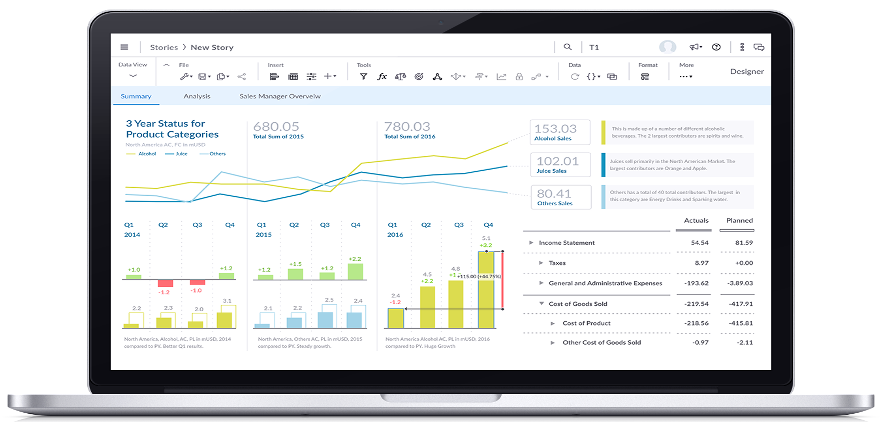
The Technology Behind SAP Analytics Cloud (SAC):
SAC is built on a cloud computing platform (SaaS – Software as a Service). SaaS is a service delivery model that is extremely popular worldwide and is now being adopted by software providers in Vietnam as well. SaaS is defined as a service delivery model in which the software runs on the web, allowing customers to access it via the Internet.
- SAC is built on SAP HANA (an in-memory database), today's most advanced database platform.
- It can connect to and integrate with multiple data sources such as ERP, CRM, and HRM systems, regardless of the underlying technology platform.
- SAP continuously enhances the product to improve user-friendliness, with the goal of delivering a solution that end users can customize to the fullest extent to support their business operations, reducing dependency on the IT department.
Features of SAP Analytics Cloud (SAC):
SAC offers two major feature sets: Intelligent Management Reporting (Business Intelligence – BI) and Business Planning (Planning).
In the past, these two feature groups were typically built into two separate products, but keeping them separate led to additional costs for businesses in terms of infrastructure and implementation, and required two separate skill sets within the IT department.
As a result, with the previous two-product approach, users had to build a plan in one product, then integrate the planning data into another product to generate management reports. With SAC, users can plan and generate intelligent management reports on the same platform, with the following features:
Business Planning Feature Group (Planning):
- Functional departments can plan and collaborate on the same platform. Users can create their own task lists, assign approvers (single- or multi-level), and the system automatically sends email reminders for pending tasks. Task progress can be easily tracked through an interface similar to a Microsoft Outlook task schedule.
- SAC offers complete flexibility in building planning data models that match the real-world operations of each functional department and each type of business. For example, the sales department can plan selling prices and sales volumes by market segment, customer group, region, or season; the HR department can plan headcount, salaries, and bonuses based on proposals from various departments to support business strategy and growth needs…
- Forecasting capabilities based on historical data, and what-if analysis.
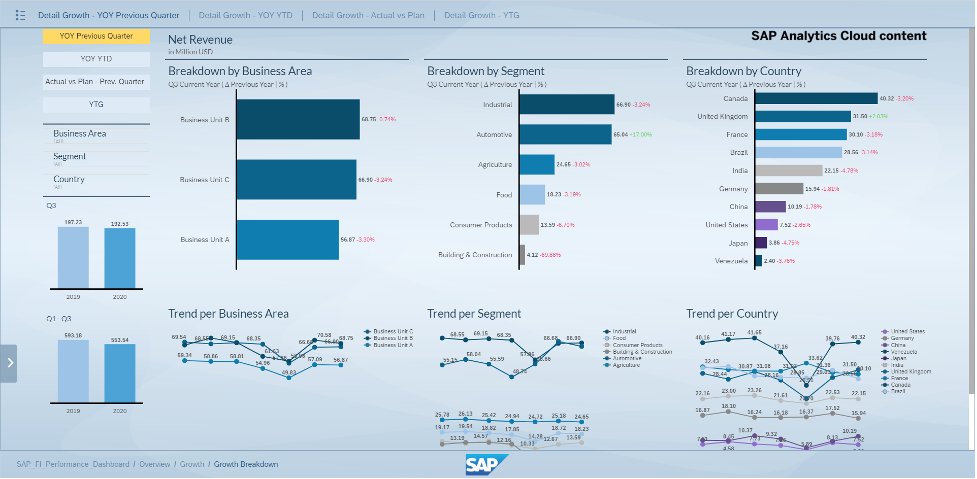
Intelligent Management Reporting Feature Group (Business Intelligence – BI):
- With SAP Analytics Cloud, users can proactively build analytical reports as needed: table-format reports, chart-format reports, and dashboards for visual data display.
- Reports can easily be designed for mobile devices such as tablets and smartphones.
- Built-in Machine Learning technology (a branch of Artificial Intelligence/AI) supports data analysis through the Smart Insight and Smart Discovery features.
- Supports an Excel add-in: users can access SAC directly from Excel, and any data updated in Excel can be recorded back into the SAC database.
- SAP provides ready-made report templates for reference, making it easy for users to create their own report formats based on the suggested samples.
The above is a summary of the technology and features of the SAC product, based on Citek's real-world implementation experience.
With hands-on experience successfully implementing the SAP Analytics Cloud solution at major enterprises such as Honda Vietnam, Loc Troi Group, and Hoa Phat Dung Quat Steel, Citek is a trusted provider of SAP Analytics Cloud implementation in Vietnam today.
