1. What Is SaaS?
SaaS stands for Software as a Service, a model for delivering software/systems to end users over the internet as a service, built on cloud computing technology. Depending on the type of SaaS software/system and its intended use, users may pay a fee for access or use certain basic features free of charge.
 SaaS – Software as a Service is a cloud computing technology model that allows users to access software via the Internet.
SaaS stands for Software as a Service, a model for delivering software/systems to end users over the internet as a service, built on cloud computing technology. SaaS users simply pay a fee to the service provider to rent access to the software/system, or can use certain basic features free of charge. SaaS makes it easy for users to access the software remotely over the Internet, typically through a web browser, without needing to download or install anything on their computer.
SaaS delivers a complete software service to customers. Everything — from the network, data storage systems, and servers, to the operating system, middleware, data, and applications — is hosted at the service provider's data center.
 SaaS delivers a complete software service to customers
The SaaS provider manages access rights, ensures that all activities on the software/system run as smoothly as possible, and is responsible for data storage and security in accordance with security standards, as well as fulfilling other commitments defined in the Service Level Agreement (SLA) between the service provider and the customer.
2. The History of SaaS
In the 1960s, computer hardware technology advanced rapidly. However, computing still took a great deal of time back then, and the cost of installing a large computer (mainframe) was quite expensive for many businesses.
By the 1990s, advances in the Internet had driven the emergence of cloud computing, including the SaaS technology model. In its early stages, SaaS was developed to overcome the limitations of continuous software and hardware maintenance associated with the on-premise deployment method, while also giving small and medium-sized businesses of the time the opportunity to access software services at a reasonable cost.
In 1999, the first SaaS (Software as a Service) product was born when Salesforce officially launched its customer relationship management (CRM) software, which immediately experienced outstanding growth. Today, Salesforce is the world's number one cloud-based CRM platform. Salesforce's success drew significant attention from other software providers, prompting today's leading global SaaS vendors — such as Microsoft, Oracle, and SAP — to enter the field.
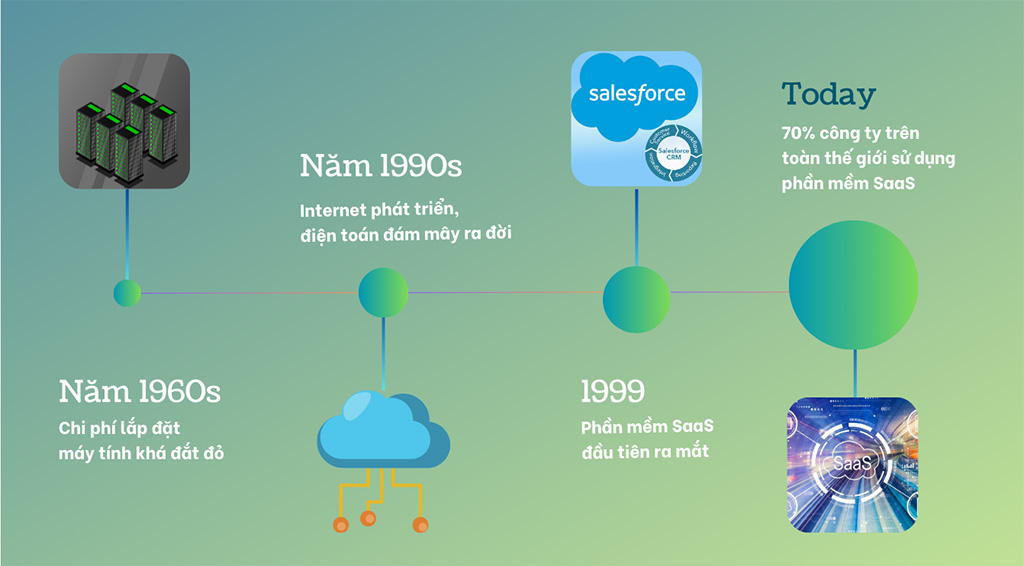 The history and development of SaaS
With continuous improvements in functionality and user experience, the SaaS technology model has seen exponential growth, with more than 70% of companies worldwide now using SaaS software (according to Gartner, 2018). In Vietnam, from large corporations to SMEs, businesses are leveraging the power of the SaaS technology model to help manage day-to-day operations and run their organizations more smoothly and effectively.
3. Notable SaaS Companies and Products
Today, the SaaS technology model is used in nearly every business activity. From the most common everyday software supporting communication and information exchange, such as Gmail and Microsoft Office 365, to more complex customer relationship management (CRM) software such as Salesforce and HubSpot — all of these are SaaS products.
In particular, SaaS ERP — enterprise resource planning (ERP) software distributed and used on a cloud computing platform — is an important tool that helps businesses significantly improve operational efficiency and keep pace with the trend of comprehensive digital transformation. Some of the leading providers of SaaS ERP solutions include SAP, Oracle NetSuite, Salesforce, Microsoft, and IBM, among others.
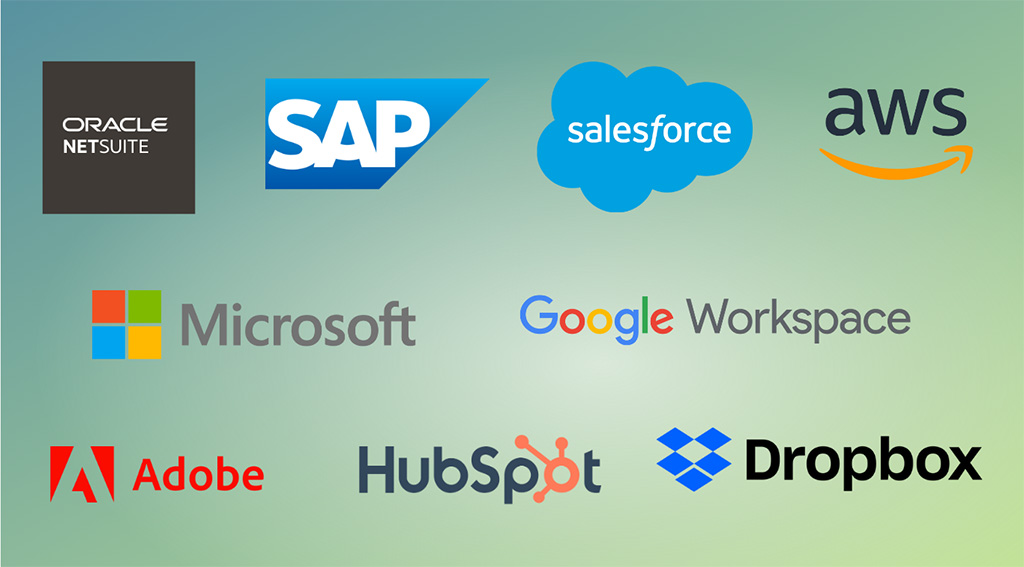 SAP and Oracle NetSuite are among the leading providers of SaaS ERP solutions
A typical SaaS product is SAC (SAP Analytics Cloud), released by SAP — the world's leading SaaS solution provider today. SAC is built on the SAP HANA database platform (an in-memory database). With two core features integrated into a single platform — Intelligent Management Reporting (Business Intelligence – BI) and Business Planning (Planning) — businesses no longer need to use two separate products for each feature as they did before, which significantly reduces implementation costs. As a product built on the SaaS technology model, users can easily access SAC from any Internet-connected device, with data hosted by the service provider rather than downloaded and stored locally by the user.
4. Benefits of the SaaS Technology Model
In Vietnam, amid a strong wave of technological adoption, SaaS is increasingly being chosen by businesses — especially SMEs — thanks to the practical benefits it offers compared to the on-premise model. The key advantages of deploying the SaaS model include:
Cost Savings and Optimized Resources
With the SaaS model, businesses don't need to spend heavily on space, servers, and other related hardware and software, as they would with an on-premise deployment. SaaS users simply pay a subscription fee to rent access to the software based on their business needs, and can cancel the service at any time when it's no longer needed, helping optimize costs.
Moreover, by adopting SaaS, businesses can cut costs related to annual maintenance or the expense of building an in-house IT department. SaaS providers already have a professional team in place to keep the system running at its best and to handle technical issues and routine fixes.
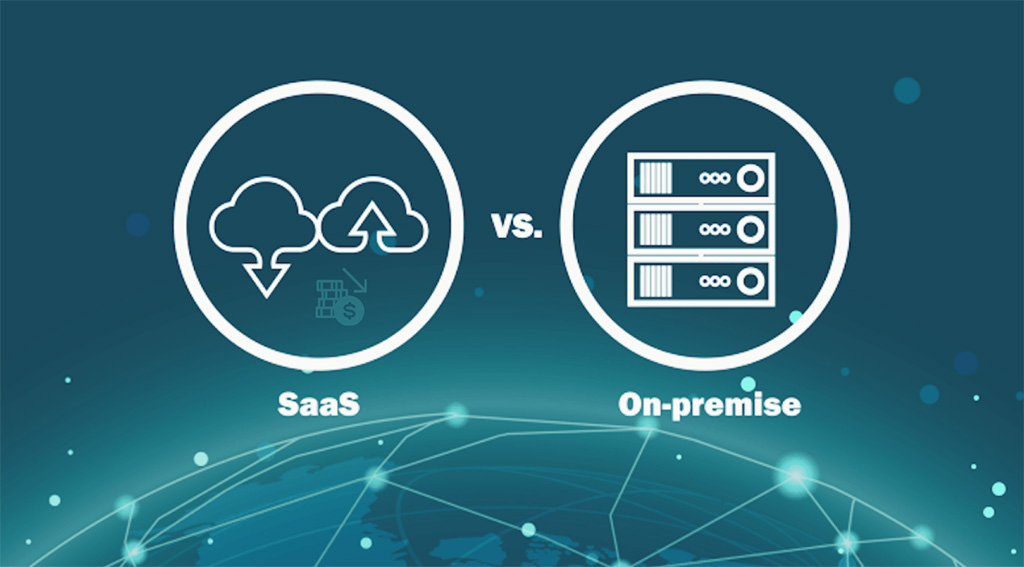 SaaS helps businesses save time and reduce hardware installation and maintenance costs
In addition, deploying SaaS software within a business is typically very fast. It usually takes only about 5–7 days for SaaS software to become usable, plus a few more days to train employees on how to use it. As a result, SaaS saves businesses a great deal of time compared to the 6 months or longer it can take to fully install an on-premise system.
Easy to Scale
As software usage needs change alongside business growth, users simply need to upgrade to a new service package, without having to purchase any additional hardware or software to support it.
For example, when a business needs more database storage space to start a major project, or needs to scale up — by adding a new branch or a new department — it simply needs to purchase more capacity or register additional accounts, without disrupting other business activities. Additionally, once a project ends, the business can flexibly adjust its service package, scaling back down to a normal level to avoid wasting capacity.
 SaaS users can easily scale up or down according to their usage needs
Flexible Accessibility
SaaS offers convenience and a seamless experience, giving users the ability to access it anytime, anywhere, on any Internet-connected device (such as a computer, mobile phone, or tablet).
Previously, with on-premise systems, users had to go to the office and turn on a computer with the software pre-installed in order to access it. Now, with just a few simple login steps using a username and password, users can quickly access the software from whichever Internet-connected device is most convenient for them. As a result, data can be easily accessed, shared, and analyzed in real time, helping managers make better decisions. And because the data is stored in the cloud, it won't be lost even if the user's computer or device happens to fail.
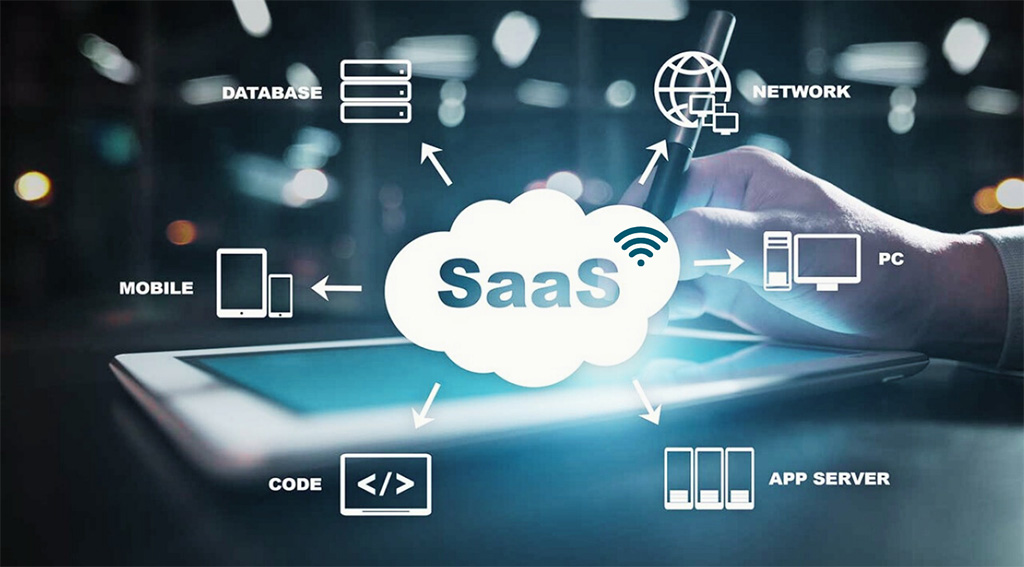 SaaS can be accessed at any time, from anywhere, on any Internet-connected device
Automatic Updates for the Latest Features
SaaS providers regularly upgrade the interface, fix application bugs, and add new features to meet customer needs. These updates are applied automatically, giving users access to the latest and most advanced features and versions as soon as they're integrated into the system.
5. Risks of Using the SaaS Model
Security Risks
SaaS focuses on flexibility, a lightweight footprint, and ease of deployment. With SaaS, the software's servers are managed by the provider. As a result, responsibility for data security shifts from the business's internal team to the external service provider. This means a business's security posture becomes dependent on its SaaS provider.
For small and medium-sized businesses, this is less of a drawback, since major cloud service providers typically maintain a higher level of security. However, it can be a challenge for large enterprises with strict data governance or security standards. For this reason, businesses should pay close attention to the Service Level Agreement (SLA) between the provider and the customer, to ensure the security commitments it contains meet the business's actual requirements.
 When deploying SaaS, businesses rely on the service provider to secure their data
Risk of Losing Internet Connectivity
SaaS requires users to have an internet connection in order to access the software. In some cases — such as while traveling on a plane or in areas with no internet signal — limited Internet access can create certain inconveniences.
Not Always Ready for New Feature Updates
While automatic software updates offer many benefits, these changes can also create some drawbacks — users may need time to get used to the new interface and features, which can sometimes affect work performance.
In some cases, updating to new features can result in the loss of old data. However, most providers notify users before rolling out automatic updates, so they can prepare accordingly.
6. SaaS Growth Trends in the Vietnamese Market
According to data from Statista, SaaS (Software as a Service) revenue in Vietnam is projected to reach US$174.10 million in 2023 and US$304.90 million by 2028, reflecting a compound annual growth rate (CAGR) of 11.86% over the 2023–2028 period.
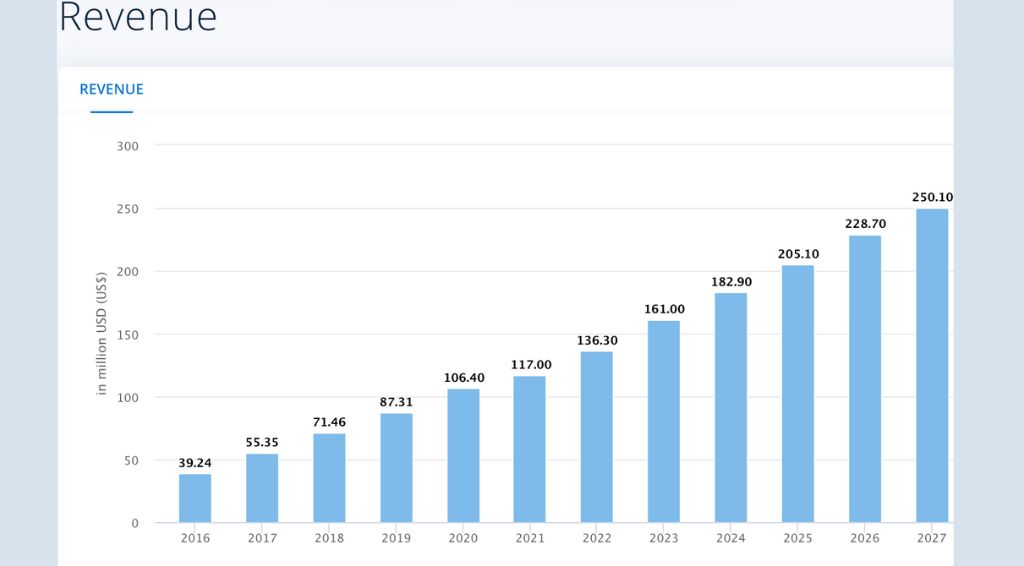 Statistics on SaaS revenue in the Vietnamese market (Source: statista.com)
The global COVID-19 pandemic drove a sharp increase in demand for digital transformation among many businesses, and together with the large number of small and medium-sized enterprises in Vietnam (SMEs), this has been a key growth driver for the Software-as-a-Service industry. The SaaS technology model is considered a promising technology solution for SMEs, since businesses don't need to install or invest in physical systems to run the software, while also easing the burden of maintaining an in-house IT team amid limited budgets and resources.
Since its emergence, the SaaS technology model has proven its important role and delivered high value to users. SaaS is especially well-suited to SMEs, which are always looking for compact, efficient technology solutions at a reasonable price. Given the rapid growth in the number of SMEs in Vietnam, the SaaS market clearly has strong potential for further growth in the future.
Read more from Citek on the common digital transformation roadmap for SMEs for a more complete overview.